Category: Black History Month

  • History is who we are and why we are the way we are

    Martin Luther King Jr. famously said, “An injustice anywhere is a threat to justice everywhere.” He said it as more of a war cry to call activists and those who care to a sense of urgency regarding injustices. The idea is that if it is allowed in one place, it can be in all places. So then, let us rise up against injustice when we see it because it’s only a matter of time before injustice affects you!

    Injustices have been fluent in America since 1865. That date should sound familiar because it was the year President Abraham Lincoln signed the emancipation proclamation, which freed the slaves in the south. Shortly after this, Lincoln tried to establish a bank for former slaves, but its white board of directors took the money and lost it on bad investments. There was no accountability.

    With the end of slavery in the south, accountability was emancipated completely. Treating a black person wrong was always acceptable as punishment for ending slavery. The time immediately after slavery was very telling because lynching immediately became popular once slavery ended.

    Bastard children, often called mulatto back then, were the result when white men raped very young black girls and impregnated them. These kids were often made orphans because the former slaves owner did not want the child and they would not allow for the victim to have the baby. This injustice became widespread.

    Everyone talks about the destruction of Black Wall Street in Tulsa, OK but that, of course, was not the only time that happened. Time Magazine, in 2021, published an article on the subject and listed other “Black Wall Street” scenarios that many were unaware of because there was never any accountability.

    The article states: “Now, 100 years after the 1921 Tulsa race massacre, awareness of this American tragedy has grown thanks to the work of activists and descendants of victims, local political support, and depictions in the HBO series Watchman and Lovecraft Country. But Tulsa’s was not the only Black Wall Street. The history of other such districts nationwide is still not widely known beyond their home cities, though they were many: Bronzeville in Chicago; Hayti in Durham, N.C.; Sweet Auburn in Atlanta; West Ninth Street in Little Rock, Ark.; and Farish Street in Jackson, Miss.”

    Police brutality toward minorities has been around as long as policing has existed. There are too many cases to name of unarmed Black people being murdered by police because they claimed they feared for their lives.

    The bottom line is that because we violate the famous MLK Jr. quote, we are paying for the widespread lack of accountability because if the injustice didn’t happen to me, why do I care.

    I believe that this lack of accountability negatively affects the reparations’ conversation because many black and whites are ignorant of history. People treat many of the injustices like isolated incidents. Then, the fact that it is widespread means that if we award damages form one incident, we are libel for all the others. This means that justice can never truly be served because America’s history is full of injustices, and to reward them all would be an end to America as we know it.

    Happy Black history month!

  • Aren’t we tired of Black history month?

    As a Black man in America, it is difficult to continue to deal with Black History Month. It’s not because Blacks haven’t done many noteworthy things, nor is it that our contributions weren’t significant. But it has to do with purpose. Maybe I’m missing it, but I don’t see the benefits.

    For years, we have had telethons, walk-a-thons, and other various fundraisers for all types of ailments. Diabetes, heart disease, muscular dystrophy, breast cancer, MS, lupus, dementia and many others. We have been finding a cure for so long that most of the money raised is to really help us cope with the reality of the disease.

    We know already that many of the degenerative diseases are caused by the Western diet, but if you listen to the diet advice from the American Diabetes Association or the American Heart Association, they will tell you to eat everything in moderation basically. The point is: Why raise money to fix something that you really don’t want fixed?

    Our country is good for giving the natives “busy work” to take their attention away from the real issue. No gatekeeper in American wants to get rid of any degenerative disease.

    This is significant because I think Black History Month is more busy work, just like MLK day and the Juneteenth celebration. Busy work design to get Black activists to feel as sense of accomplishment and get them off the real issue.

    Instead of Black History, we need to tell the true American history story. Celebrate the good, bad, and ugly because it is truth. By doing this, it becomes easy to challenge the status que in talks of reparations. Many people still believe that reparations is about slavery. We don’t need reparations for slavery. Far worse scenarios have happened after that. Every decade since slavery could qualify for reparations. Instead of celebrating Black History Month, let’s talk about that for a month!

  • Still not a fan of Black history month

    Well, I couldn’t let February exit without mentioning something about the concept of Black history month. I just don’t understand the purpose of it.

    Black people are probably some of the most talented people on the planet and it seems that in everything they take part in they end up taking it over. This is not something to brag about, it’s just a fact. In the sciences, Black people have been behind some of the greatest innovations known to man. And in most cases, some white guy took the credit because Blacks were unable to hold patents. Research all the inventions Thomas Edison is credited for and when you do you will just call him a thief.

    In the medical field, Blacks have also dominated the industry starting with the first Black man to practice medicine in America. Dr. James McCune Smith was the first in 1837; Dr. Charles Drew changed blood transfusion storage; Dr. Daniel Hale Williams performed one of the first open heart surgeries and founded the first Black-owned hospital; inventor Otis Boykin improved the pacemaker; and everyone knows what Dr. Ben Carson did.

    Of course, in sports, there are way too many to name but the greatest boxers, basketball, football, baseball, soccer, tennis, track and field competitors and golfers are people of color. Before the NHL was formed Canada already had the Colored Hockey League (CHL) and many of the innovations in hockey came from that league.

    Cooking, business, construction, you name it, but throughout history, there has been a great fear coupled with the mistreatment of people of color. Exclusion, inequality, racism, and the like have been embarrassing to this country. So it seems to have a month to celebrate the contributions is a slap in the face.

    Some of the greatest movies, music, art, poetry, and entertainment have always come from people of color. Yet somehow in all of these fields, Black people have still not benefitted financially from being the best.

    It would be better to just not have a month to discuss any minority contributions. We should just compensate them properly for their contributions and move on!

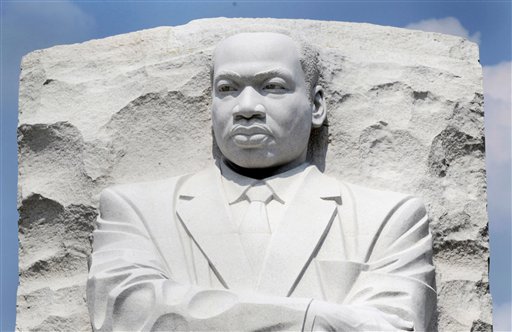
  • Choices — a tribute to Dr. King

    This week we honor a great man who dared to take what he knew and teach it to others. He did this with no regard for his own life, future earnings or even the safety of his family.

    He chose a way of life that would benefit the greater good. How unselfish.

    I often wonder what Martin Luther King Jr would  have done if he was selfish and had bought into the American dream?

    Don’t get me wrong, there is nothing wrong with success if that’s your thing. And there is nothing wrong with earning money or climbing the corporate ladder. I just wonder for his time, what a guy with his skills could have done?

    He was a great orator! He could have been one of the greatest spokespersons the field of marketing and advertising ever saw — especially with his popularity. The actor and former U.S. president Ronald Reagan made more money as a spokesperson than he did in all of his movies combined! As he became a household word, I wonder how that helped his presidency?

    It goes without saying that King would have been the King of televangelism. Since the likes of Creflo Dollar, TD Jakes and Joel Osteen this has become a billion dollar industry. All of these guys mentioned are multimillionaires. Pat Robertson and Jim Baker didn’t have half of King’s ability and did alright in the financial department because of the power of TV. If Pat Robertson had the compassion, integrity and skill of King he would have had a successful bid for the white house.

    And then there was Dr. King’s leadership ability. He was a transitional leader who really knew how to build relationships, empower and motivate people and change lives. Under such leadership, I don’t believe the auto industry would have had the near collapse it was faced with a couple of years ago.

    Somewhere along the way the quality of America’s products took a dive and we were left holding the scrap metal. No one looked to blame poor management instead they blamed a struggling economy. We blamed the economy during a time when Toyota, Hyundai and Honda posted record sales. These companies didn’t need a buyout and they thrived in the same American market!

    I could go on, but the point is that when you really examine the choices Dr. King made compared to his options, he’s an even better man than we thought.

    Happy birthday and thank you for your choices Dr. Martin Luther King Jr.!

  • What does Reparations look like?

    In the spirit of Black History Month, I’d love to enter into a serious discussion about reparations. It seems as though this has become a taboo topic, because of the tension it brings with Blacks and Whites. It’s sort of the new racism: If you are for it, then you want to get something for nothing. If you are against it, then you are a racist.

    This should not be.

    Maybe it’s another case that America is not smart enough to really deal with. I mean, as a country, we are already paying reparations to a variety of folks, including Native Americans, Japanese atomic bomb survivors and Holocaust survivors. The word” reparations” simply means “to repair.” This concept brings up the idea of being broken. The idea of pay is just one way; not THE way.

    I am in favor of reparations. But I think we need to be careful what we call reparations. I’m not for cutting a check for every person that had a link to slavery. Actually, I don’t think reparations should even be connected to slavery. You see, there are some things that our government did deliberately to African-Americans. These things had lasting effects that have made it difficult for some to become anything but a permanent underclass.

    There was a missed opportunity for the Bush Administration to redeem itself when the recession started. Consistent with his ideology of tax breaks and stimulus packages, Bush could have ordered reparations be given to the poor in the amount of $30,000 and say that it’s because of slavery. “Poor” would be defined as any African-American who is living in generational poverty (two generations or more). If Bush did this, he would have redeemed himself and the Republican party because he would have literally bought the poor black vote. At the same time,  in 2008, now President Barack Obama spoke against reparations. If we are being honest, we know that the 30k would have ended up right back into the economy in less than 30 days. What a jump start that would have been. It may have even ended the concept of White guilt … or maybe not.

    So here is what I would propose for reparations. What I would like to see happen is to give opportunity, not money. The Federal Housing Administration did not do right by minorities in the 1930s. Low interest rate loans were given to White people to buy nice homes and the loans had nothing to do with their credit. They got those home loans because of the color of their skin. I say we do the same thing today. Identify the disenfranchised of our time and help them into a home that, on their own, they could never get. I don’t mean to give a mansion away to the poor, but I do mean to follow the example of Habitat for Humanity and make that single mom with four kids a homeowner. Literally, grant her a pass on the credit score and give her a loan to have a reasonable mortgage payment not to exceed $400 a month. This house has to be in a suburban area with a better than average school system. This could easily be done. As a country we’ve done it before.

    The second thing I would do is grant 10 years of government paid education (or forgiveness if you have school loans and finished your degree). This would allow any minority who is on welfare and in a dead end career to elevate themselves higher. They would have to put in the work though. They could never be on academic probation and they would have to have a life coach. This would grant those who have had hard lives to get a second chance to fix some of the problems they have had.

    The sad part of all this is that most would not take advantage of it. Nevertheless, it’s something that should be done. It’s finally an opportunity to get ahead with the assistance of your government working in your favor. This is what reparations should look like.

  • It’s February and you know what that means…

    February is Black History month and I guess I’m still stuck with asking the same question: Why?

    I mean, I guess it’s a good thing, but I would still love to see each month being dedicated to a different race. I get this idea from growing up in Detroit. In the summer time, the City of Detroit hosts a summer full of ethnic festivals each weekend and scores of people come down to the heart of the city to celebrate. There’s always music, food, people dressed in authentic clothing and lots of trinkets to buy!

    It’s always fun — no matter which festival it is — and it’s always educational. I’m sure that this social event draws most of the people because of the location and all the happenings. However, there is that side of me that wants to believe that in Detroit we are more cultured and care about and support our difference more than despising them.

    Just having Black History month seems like a quick solution to shut someone up. I mean, was this the solution to stall talks of reparations? Is this so that Blacks will have something of their own or unique to them?

    So who is celebrating Black history month exactly? It seems that many of the businesses that are supported by Blacks are doing some type of tribute whether that be in the form of a commercial or hosting some event. Now of course we’re not talking about a lot of companies here. Sales show that the number one fast food company for Blacks is McDonald’s. For whatever reason, McDonald’s has profited off Black dollars more than any other fast food chain. Johnson and Johnson sells more hair care products for Blacks than any other company. Look for these two companies to run commercials and sponsor events during this month.

    I don’t mean to put this in a negative light. I just like it better when purpose is clearly seen in what we are doing. I’m not opposed to educating the world on the contributions of Blacks in American history. I would just rather see it in the classrooms and accurately written in our history books instead of just dedicating a month to showcase a couple of folks.

    Frederick Douglass once said, “America is false to the past, false to the present, and solemnly binds herself to be false to the future.”  This is a powerfully true statement. All the problems we face as a country come because we have not been true to our past nor true to our present. We categorically deny all charges of wrongdoing in the past. When has the American government admitted any wrongdoing? The treatment of minorities in this country is the worst. There is not a country that has been more deceitful. This has led to many of the problems we face as we worship the almighty dollar!

    We cheat our future by lying in the present. Our government (I’m including the current and last presidents and congress over the last 12 years) has not been a good steward of our economy. There are too many lies and empty promises. The result of this is a dim future for our children.

    So I wonder what the history books will say about this era? Twenty years from now will Black history month be celebrated by talking about President Obama’s contribution to the national debt or will Black history be a thing of the past by then.

    Only time will tell.