
Tag: Diet

  • Advantage: Profit and the people lose again

    Who doesn’t enjoy a good burger with fries and a cold drink? I mean, we are in the middle of summer, and there are so many places to get a burger.

    McDonald’s, Burger King, Wendy’s, Culver’s, Checkers, Sonic, and Hardee’s can all give you the typical burger, fries, and drink combo. But at what cost?

    When we eat these foods, it is rare that we consider the residual effects of this choice. If we did consider it, we would not eat it. I wish all we had to worry about was the calories. A typical combo meal from any of the restaurants named would be over 1,000 calories — easily. And if we brought in carbs, fats, and sodium, you could have a heart attack just thinking about it.

    The larger chain restaurants are even worse. Chili’s, Applebee’s, Cheddars, and even Red Lobster, Olive Garden, and Outback are far worse than the fast food joints.

    The reason? They are in business to make money by any means necessary, and if that means over time, millions will suffer from degenerative diseases related to obesity — oh well!

    These restaurants are giving customers what they want. For most of us, if you put a plant-based burger with lentils, beans, and mushrooms as its base next to a quarter pound beef burger seasoned well, the choice (based on taste) would be the beef burger.

    Further, if you tell us the consequences of eating both, most folks won’t care. They will make statements like, “Well, we all gotta die of something.”
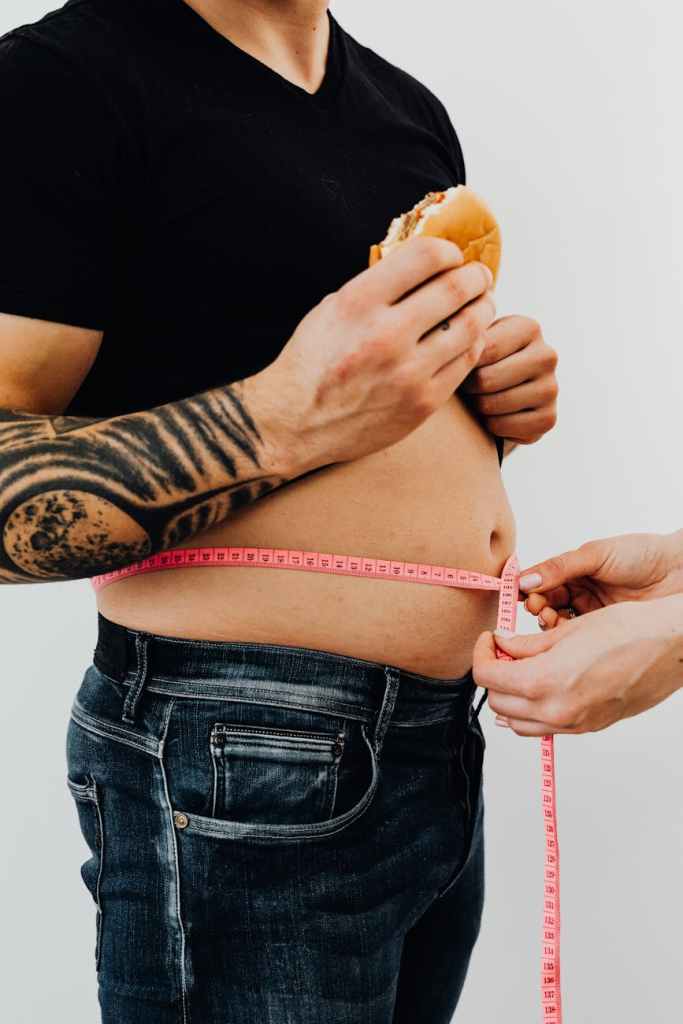
    By this same logic, why would anyone save money, buy stocks, have a 401k, or invest anything in the future? Our eating decisions will ensure we won’t be around to enjoy it.

    It is hard to blame the restaurants for making a buck, and they have the nutritional information available for everyone to see.

    In the US, there are 119.9 million people with high blood pressure and 38.4 million diabetics. Heart disease is still the number one killer in America, and 40 percent of all citizens are obese which is about 100 million. The lion’s share of this is based on what we eat. You could work out for five days and literally undo your progress over the weekend by eating at the restaurants listed.

    The Food and Drug Administration could do something about this. It controls the ingredients used. They won’t because too much money is spent treating our sickness, and too many lobbyists have dispersed checks for their silence.

    YOU have to make YOU better, or the advantage will stay with profit.

  • Aren’t we tired of Black history month?

    As a Black man in America, it is difficult to continue to deal with Black History Month. It’s not because Blacks haven’t done many noteworthy things, nor is it that our contributions weren’t significant. But it has to do with purpose. Maybe I’m missing it, but I don’t see the benefits.

    For years, we have had telethons, walk-a-thons, and other various fundraisers for all types of ailments. Diabetes, heart disease, muscular dystrophy, breast cancer, MS, lupus, dementia and many others. We have been finding a cure for so long that most of the money raised is to really help us cope with the reality of the disease.

    We know already that many of the degenerative diseases are caused by the Western diet, but if you listen to the diet advice from the American Diabetes Association or the American Heart Association, they will tell you to eat everything in moderation basically. The point is: Why raise money to fix something that you really don’t want fixed?

    Our country is good for giving the natives “busy work” to take their attention away from the real issue. No gatekeeper in American wants to get rid of any degenerative disease.

    This is significant because I think Black History Month is more busy work, just like MLK day and the Juneteenth celebration. Busy work design to get Black activists to feel as sense of accomplishment and get them off the real issue.

    Instead of Black History, we need to tell the true American history story. Celebrate the good, bad, and ugly because it is truth. By doing this, it becomes easy to challenge the status que in talks of reparations. Many people still believe that reparations is about slavery. We don’t need reparations for slavery. Far worse scenarios have happened after that. Every decade since slavery could qualify for reparations. Instead of celebrating Black History Month, let’s talk about that for a month!

  • Healthwise: Doing fine in the US is cognitive dissonance

    How common is this: You’re walking someplace, and you see a friend. You say, “Hey, how are you?” And the friend says, “Fine, how are you?” For most people, this is a normal conversation which has no real meaning. It is an empty standard greeting.

    The truth of the matter is we don’t know how really bad we are doing until you change behavior and start doing better. Now, this is not a blog on healthy eating or a plea for you to change your diet. What’s this? It’s a blog on awareness with the intent to bring about change.

    Let’s start with the Food and Drug Administration. The FDA has sold us a bill of goods. I thought that they were the watchdogs in the food and drug fields to make sure big pharma and food manufacturers don’t kill us in unsafe practices or substance abuse. In fact, what the FDA is doing is searching for the thin line between how many toxins the body can put up with verses the kickbacks they get for allowing mandatory minimums when it comes to our health.

    How much fecal matter can we consume before it kills us? How many insects, poisonous waste, and dangerous substances can we consume with too horrible side effects?

    It is true that the FDA doesn’t even regulate the entire food label. They only oversee the nutritional information on the back. On the front, a food maker can claim a bunch of things, and it doesn’t have to be true. They can use words like organic, wholesome, healthy, sweet, whole grain, or low sodium, and it is up to the consumer to figure out the truth.

    Much of our food is banned in other countries. Our pork, chicken, and beef don’t meet the standards outside of the US. Chicken, for example, is washed in chlorine and injected with salt water so that it weighs more when it’s being sold. Most of the food we consume has so many additives, preservatives, and other toxins that, over time, cause many diseases. Our food is so void of nutrients (about 70 percent is processed) that even if you exercised twice daily while consuming the standard American diet, it would still be harmful to you.

    We have so many degenerative diseases due to our diet that we live very unhealthy lives. Saying we’re “fine” has become a figure of speech and not a state of mind. We can not allow the FDA to be our guide. We have to seek moderation in much of what we eat, consume far more fruits and vegetables (mostly raw), get plenty of sleep, and drink plenty of spring water. Eat meat in moderation and exercise every day. This is just the start.

  • What’s up with the fresh fruit in the US?

    We are being grossly short-changed in our fruit consumption. We pay more for produce than any other nation in the world. Much like healthcare, we are charged the highest price possible, and the purchase is nowhere near the quality.

    We are told that fresh produce costs more to farm than processed foods. So for that reason we are paying a little more for our fresh produce. The problem with this is that 70 percent of our produce comes from California. Arizona and Washington are second and third, respectively, but why? There is a huge difference in living in the South than the North when it comes to produce.

    Although some produce is imported, most of the in-season fruit is grown in the South but not shared across the country. South Carolina and Florida grow very nice watermelon, but if you live in Michigan, you can only get what is shipped from Mexico. You have to really search the farmer’s markets to get something more fresh, but all the commercial grocers have horrible fruit.

    When fruit ripens, the sugar to liquid ratio increases, which is what makes it sweet. Because our government has chosen to ship our fruit from overseas, our fruit has to be picked well before it ripens so that it is more solid and hard so it can make the trip over here. By the time you are washing it off at home, all you have is some strawberry imposter that can’t get any sweeter.

    This placebo effect for produce does not have the nutrients, taste, smell, or vibrance that it had in the 70s.

    You really don’t know how bad this is until you travel outside of the country. Jamaica has more than 30 fruits grown there. Some I had never heard of, but all were absolutely delicious! Not only was the taste amazing but the cost was ridiculous! On welfare, I would be able to afford a bounty of it all.

    In totalitarian regimes, people eat what they are told they can eat. In a democracy, “we the people” are supposed to decide what they consume. I don’t know what to call what we have in America – I just not that it is worse than the other two.

  • Yes, we really can!

    This week I decided to try something a little different and let a friend of mine take the podium. And her topic dovetails nicely with a post I am writing for next week.

    Ann Richardson is a friend (disclaimer) and a former colleague of mine from my newspaper days. She shares a lot of my views and we both think it is because we share the same birthday! Enjoy!

    And stay tuned for next Sunday’s post when I share my two cents worth with you about the great health care reform debate!

    If you’ve been watching the news lately, it’s no secret that obesity in the United States has exploded. Recent statistics say that over half of all adults in the U.S. are either overweight or obese.

    And unfortunately, obesity is becoming all too common in our children, too – disproportionately affecting minority kids (African American, Native American, and Hispanic).

    Being overweight as a kid increases the risk of developing high cholesterol, hypertension, respiratory ailments, orthopedic problems, depression, and Type 2 diabetes.

    In 2000, the total cost of obesity for children and adults in the United States was estimated to be $117 billion ($61 billion in direct medical costs).

    We need to do something – NOW – because all of this is preventable.

    I was delighted to hear that Michelle Obama has made it her own personal crusade to fight childhood obesity during her tenure as First Lady.

    Mrs. Obama has at least one ally in her fight – and he lives in Boulder, Colorado.

    I learned about Rob Nagler when I ran across an article in Sunset magazine about the nonprofit organization he founded whose goal is to make walking and biking to school a part of every kid’s daily routine.

    According to the article in Sunset, in 1969 about 88% of kids who lived within a mile of their grade schools either walked or biked to school. Today, only about 16% do.

    That’s a statistic that Nagler decided to help change – starting with his own two kids and their classmates at their Boulder, Colorado school.

    Nagler, a computer engineer, found a way to track kids who rode their bikes or walked to school by installing a solar-powered scanning device at school. The device reads an ID tag placed on a child’s backpack or bike helmet and uploads the data into an online database.

    Each child (and the school) can track their progress – and keep tabs on the “incentives” that each kid earns as he/she racks up the miles. The incentives are small, but fun – like colored plastic bracelets that denote a different level of achievement; stickers; and the ultimate in cool prizes: an iPod.

    Boltage is a very successful program. Fifteen schools in four states have installed the devices and have programs of their own.

    But don’t take my word for it: check out the scoreboard on their site.

    As of Dec. 1, 2009, the kids have:

    • Walked/biked more than 258,000 miles
    • Burned more than 9.2 million calories
    • Saved 24, 306 gallons of gasoline
    • Made 184,423 round trips between home/school
    • Saved 482,083 lbs. of carbon

    Pretty impressive!

    The kids love it.

    And they’re learning to make exercise part of their daily routine – while reaping the health benefits of an active lifestyle and doing what they can to help the environment.

    Boltage’s goal is to reach 40,000 public schools – will your school be the next one to start a program?

    If you want to start a Boltage program at your local school, click this link to the Boltage website.  If you want to read more about the Boltage story, click this link to a PDF copy of the story I read in Sunset magazine.