Tag: Racism

  • History is who we are and why we are the way we are

    Martin Luther King Jr. famously said, “An injustice anywhere is a threat to justice everywhere.” He said it as more of a war cry to call activists and those who care to a sense of urgency regarding injustices. The idea is that if it is allowed in one place, it can be in all places. So then, let us rise up against injustice when we see it because it’s only a matter of time before injustice affects you!

    Injustices have been fluent in America since 1865. That date should sound familiar because it was the year President Abraham Lincoln signed the emancipation proclamation, which freed the slaves in the south. Shortly after this, Lincoln tried to establish a bank for former slaves, but its white board of directors took the money and lost it on bad investments. There was no accountability.

    With the end of slavery in the south, accountability was emancipated completely. Treating a black person wrong was always acceptable as punishment for ending slavery. The time immediately after slavery was very telling because lynching immediately became popular once slavery ended.

    Bastard children, often called mulatto back then, were the result when white men raped very young black girls and impregnated them. These kids were often made orphans because the former slaves owner did not want the child and they would not allow for the victim to have the baby. This injustice became widespread.

    Everyone talks about the destruction of Black Wall Street in Tulsa, OK but that, of course, was not the only time that happened. Time Magazine, in 2021, published an article on the subject and listed other “Black Wall Street” scenarios that many were unaware of because there was never any accountability.

    The article states: “Now, 100 years after the 1921 Tulsa race massacre, awareness of this American tragedy has grown thanks to the work of activists and descendants of victims, local political support, and depictions in the HBO series Watchman and Lovecraft Country. But Tulsa’s was not the only Black Wall Street. The history of other such districts nationwide is still not widely known beyond their home cities, though they were many: Bronzeville in Chicago; Hayti in Durham, N.C.; Sweet Auburn in Atlanta; West Ninth Street in Little Rock, Ark.; and Farish Street in Jackson, Miss.”

    Police brutality toward minorities has been around as long as policing has existed. There are too many cases to name of unarmed Black people being murdered by police because they claimed they feared for their lives.

    The bottom line is that because we violate the famous MLK Jr. quote, we are paying for the widespread lack of accountability because if the injustice didn’t happen to me, why do I care.

    I believe that this lack of accountability negatively affects the reparations’ conversation because many black and whites are ignorant of history. People treat many of the injustices like isolated incidents. Then, the fact that it is widespread means that if we award damages form one incident, we are libel for all the others. This means that justice can never truly be served because America’s history is full of injustices, and to reward them all would be an end to America as we know it.

    Happy Black history month!
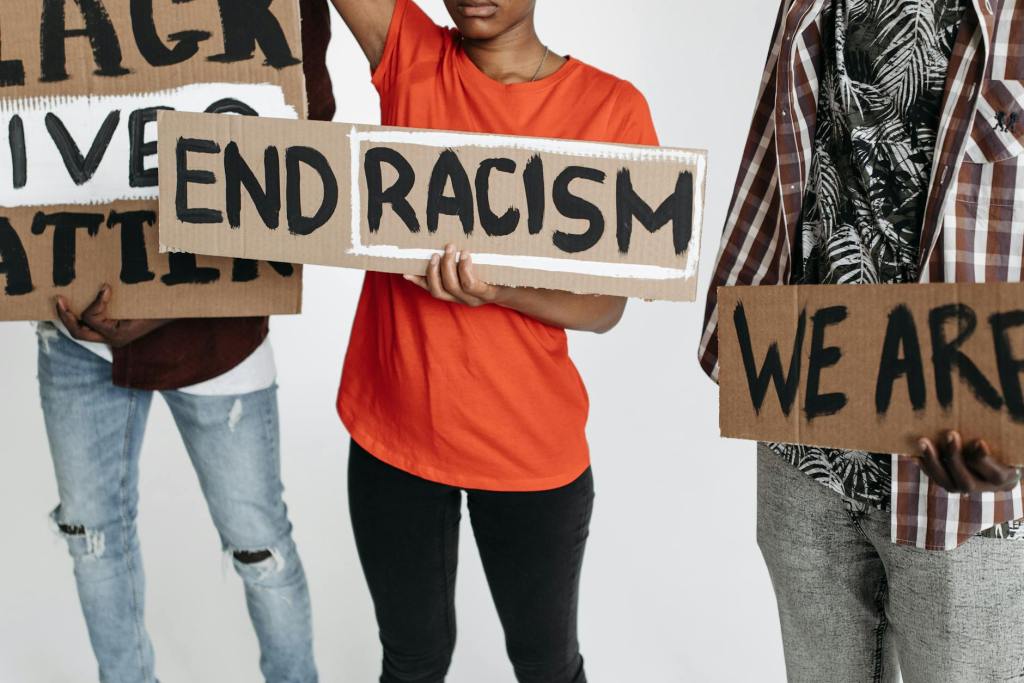
  • TN lawmakers embrace racism, gay hate while banning song: Eve was Black

    Racism used to be a covert operation. Racist folks wanted to conceal their identity so as to not receive backlash from their choices. Now, it seems that it is fashionable to embrace racism just as the Tennessee lawmakers have done recently.

    It appears that Tennessee is the testing ground before policies go national. Recent focus has turned to the banning on a Grammy award winning song by Allison Russell titled Eve was Black. The song links all races together and challenges the hate that is demonstrated by some seemingly because of race. It is bold, honest, and challenging.

    The song holds the claim of the leading hypothesis among scholars in this area that the whole human race entered the world through the legs of a dark-skinned woman. Not Black, not Egyptian, not Hebrew, as there wasn’t a race back then, but the first humans were Black.

    This truth bothers some people enough to ban the song in the state. Until we deal with the sin of racism, we are doomed to keep recycling it in our society. The following is  the lyrics to Eve was Black.

    Allison Russell

    “Eve was Black, haven’t you heard?
    The Mother of All was Dark and Good
    Eve was Black, didn’t you know?
    Is that why you hate my Black Skin so?
    Is that why you hate my Black Skin so?

    Does it remind you of what you lost?
    Do you hate or do you lust?
    Do you despise or do you yearn?
    To return, to return, to return

    Back to the Motherland
    Back to the Garden
    Back to your Black Skin
    Back to the Innocence
    Back to the shine you lost
    When you enslaved your Kin

    Why do you try to touch my hair?
    Do you hope to find a blessing there?
    Why do you try to keep me down?
    Do you hope to sow this barren ground
    With my black blood, black magic blood
    With my black blood, black magic blood

    Do I remind you of what you lost?
    Do you hate or do you lust?
    Do you despise or do you yearn?
    To return, to return, to return

    Back to the Motherland
    Back to the Garden
    Back to your Black Skin
    Back to the Innocence
    Back to the shine you lost
    When you enslaved your Kin

    What do you hope for as you tie the rope?
    What do you hope for as you hoist me up?
    What do you hope for as you watch me swing?
    Will the Witness Tree Salvation bring?

    Do I remind you of what you lost?
    Do you hate or do you lust?
    Do you despise or do you yearn?
    To return, to return, to return

    Back to the Motherland
    Back to the Garden
    Back to your Black Skin
    Back to the Innocence
    Back to the shine you lost
    When you enslaved your Kin

    Oh, my Sister, oh, my Brother
    Oh, my Mother, oh, my Father
    Oh, my Cousin, all my pale Kin
    Can’t wash this sin
    Can’t wash this sin
    Can’t wash this sin
    With my Black Blood
    With my Black Blood”

  • Racism – is it really all just in our heads?

    Clyde is traveling in Nashville this week and asked me to “fill in” for him with a post about an article I ran across on MSNBC about children with a rare genetic disorder that causes them to ignore race and skin color. Learn more about what this unusual condition is teaching us about the origins of racism and gender stereotypes.

    Ann M. Richardson

    I read an article today about children born with a rare genetic disorder known as Williams syndrome that causes them to have a complete lack of social anxiety.

    An interesting by-product of this defect is that the children have no racial biases, according to a researcher from the University of Heidelberg in Germany.

    Normally, children show clear preferences for their own ethnic group by the age of three, or sooner, according to other research. In fact, children without the defect consistently associate positive traits (friendliness, kindness, etc.) to people that are the same race as themselves.

    When asked a negative question, “Which is the naughty boy?” children without Williams syndrome indicate that the naughty boy is the one from the “other” race.

    Williams syndrome is caused by the absence of a gene that affects the brain and other organs. People with this syndrome are “hypersocial,” meaning that they don’t experience the anxiety, nervousness, and self-consciousness that plague the rest of us – especially adolescents.

    Sounds like it would be great if we all had Williams syndrome, doesn’t it?

    Can you imagine what it would be like to live in a world where no one hated anyone just because of the color of their skin or their ethnic background? And no one got the jitters when they had to speak in front of a group of people?

    Sounds like utopia to me.

    But Williams syndrome does have some drawbacks.

    Kids with Williams syndrome (WS) will put themselves at risk to help someone else while giving no thought for their own safety. Despite considerable empathy for others, the disorder leaves them unable to process and assess what scientists call “social danger signals.”

    Or what I call a lack of plain old “street smarts.” The kind of wariness that tells you when to walk away (or even run) from a fight – or when “something just doesn’t feel right.”

    Not surprisingly, this lack of street smarts puts WS kids at greater risk for rape and physical assault.

    So is racism really “all in our heads?” Or is it all biological? And if it is biological, can we do anything about it?

    According to researcher Andreas Meyer-Lindenburg, WS kids may be missing critical genes, but:

    “We are not saying that this is all biologically-based and you can’t do anything about it [racial bias]. Just because there is a genetic way to knock the system out, does not mean the system itself is 100 percent genetic,” he said.

    The study shows that racism requires social fear. “If social fear was culturally reduced, racial stereotypes could also be reduced,” Meyer-Lindenberg said.

    Another interesting thing learned from this study: although children with Williams may lack street smarts, they do hold gender stereotypes just as strongly as normal children.

    Meyer-Lindenberg says that we now know that “gender and race are processed by different brain mechanisms,” Meyer-Lindenberg said. Other researchers have learned that in the brains of people with WS, the amygdala — where our emotions reside — fails to respond to social threats. While the amygdala is normal, it is misdirected by the pre-frontal cortex — the CEO of the brain — to block all social anxiety.

    Scientists theorize that this interaction in the brain affects racism, but it does not seem to play a role in the formation of gender stereotypes.

    Meyer-Lindenberg and his colleagues at the University of Heidelberg are using brain imaging to get a clearer picture of how racism and sexism are differentiated in the brain.

    The German study was published in the journal Current Biology.

    Click here to read the complete article I read on MSNBC.

    Clyde will return this Sunday – in the meantime, share your comments with me about this article.

    Let me know what you think:

    • Is racism due to nature or nurture? Do we learn it or is it biological?
    • If it is biological, can we do anything about it?
    • And what are the implications of this research? Will we soon have a”pill” available that eliminates racism?