Blog

  • Was it all worth it?

    Finally!

    Combat troops are out of Iraq and by the end of 2011 the rest of more than 50K soldiers left will come home.

    It seemed like we were never going to get to this point. We heard words like “leave responsibly” and “finish the job” and so we waited  — patiently most of us – until the Obama administration made good on a campaign promise to end this war.

    The looming question being asked today is: “Was the war in Iraq worth it?”

    Some experts were quick to say “too early to tell.” Some war activists were quick to say “hell no, it wasn’t worth it.” The American people then began to line up and choose sides. Politicians struggle to try and say the “right thing” so as not to anger their constituents. We’re so predictable.

    Seven years after the start of Operation Iraqi Freedom, our troops headed out like thieves in the night. No celebrations, no victory songs, no pomp and circumstances … they just left. Where are the ticker-tape parades? If the media didn’t tell us, we would have never known they were leaving. Many of the troops interviewed seem to just be glad they got out in one piece. I’m glad they did, too.

    Maybe they were thinking about their fallen comrades – more than 4,400 of them – which make us all, deep down inside want this war to be worth it. With a price tag of $750 billion of our children’s future spent, we try to remember the most important things and forget some of the things that haunt us now – and will continue to for a long time.

    We’d rather remember the toppling of Saddam Hussein’s statue or maybe even his capture or execution. We try to forget that we put him in power over there in the first place, or that we never found any weapons of mass destruction. I even feel like I lost part of my Christianity for cheering with friends the day Saddam’s sons were gunned down in a vicious shoot out.

    We’d rather remember the photos of the Iraqi people voting or their children going to newly-built schools. We don’t want to even talk about the number of Iraqi people who died because they were in the wrong place at the wrong time. Whether it was from a terrorist bomb or one of our bombs, I’m still waiting on an official count of their numbers. We don’t even talk about it, which should let you know how bad it really is. It makes me sad to even think about it.

    The bottom line is that if we even have to ask this question, then we probably already know the answer. Was the Revolutionary War worth it? Were WWI and WWII worth it?

    If my son comes home from school crying because some kid bullied him and his father allowed it and I go and beat up the man and spank the boy in front of my son, was that worth it? If a felon attempts to rape my daughter and I shoot and kill him, was it worth it? When did violence become the first option in solving problems?

    NOBODY WINS IN A WAR and NO WAR IS EVER WORTH IT!

    The only lesson to learn here is that America needs to get the beam out of its eye before trying to get the speck out of another country’s eye.

  • Can you love me?

    I’ve been pondering a question all week.

    I’ve been thinking whether or not it is easy to love me.

    Arrogance makes you answer the question too quickly and say, “Of course it is!”

    But in your most inner thoughts, when you get really serious about answering this question, what do you come up with?

    The first thing I thought about was what criteria I would use to really determine it:

    • Would I base this on the grounds of how often I attend church services?
    • What about how much money I make?
    • Or whether or not I can remain faithful and committed in a relationship?
    • Do my possessions make me easier to love?
    • What about my political views?
    • Am I easier to love if I have the heart of a servant or a leader?
    • Would I be easier to love if I were completely fit?
    • What about my intellect?
    • Would I be easier to love if I were smarter?
    • What if I were more attractive?
    • What if I were cleaner?

    The list could go on and on.

    So if I were to answer the question seriously, I would have to look at some standard of love.

    I chose to use Jesus Christ – since most people in our country show some allegiance to Him. The Bible says God is love, so in the case of the Son, He would have to be love, too.

    John 3:16 say, “For God so LOVED the world that He gave … .” It would appear that giving is a great place to start. If I could give unconditionally of my time and my means, this would make me easier to love because of the way I give.

    I think another important characteristic is sacrifice. It seems that a person who can be selfless would literally draw people to himself. This must be an important aspect as well.  I’m obviously still pondering this question. However, if I was to look at the other side and assume that it was difficult to love me, could I be honest and admit that it’s difficult?

    Why would it be difficult? Because I feel entitled and I want others to serve me, I make it difficult to love me. Because I feel someone owes me something or I’m not happy with my life and I want others to suffer because I’m not happy. Or because I think that I’ve done some great thing in the past and now I’m owed. Like say if I raised a family, maybe now I feel that my adult kids owe me something.

    Bottom line is this: We are going to one day stand before the judgment seat of Christ and we will have to give an account. When that time comes, can we say that we were lovable or unlovable?  This is our choice and I choose to be lovable. I choose to make a difference in the lives of the people that I come in contact with so that they will be better people, too. I pledge to let my light shine to honor my Father in heaven.

    If you choose the latter, I hope today you change. If not, I pray that He has mercy on your soul.

  • Liberty and justice for all?

    President Barack Obama’s endorsement of a controversial plan to build a mosque just blocks from Ground Zero has fueled raging debates over religious freedom and sensitivities over the 9/11 attacks.

    One of the many things about President Obama’s presidency that bothers me is the fact that Christians I know keep circulating propaganda that says Obama is not a US citizen. Furthermore, there is an email – I call it a hate email – that talks about Muslims out-numbering and taking over America. This is also being circulated by so-called Christians.

    I’m reminded of a quote by Gandhi: ‎”I like your Christ, but I do not like your Christians. Your Christians are so unlike your Christ … ”

    How true, how true!

    I’d like to think that America is home to some of the smartest people in the world. I’d also like to believe that given the facts, we, as a people, would allow for our opinions to be trumped. It’s sad that I can’t believe or think these things.

    How can we be “One nation under God, indivisible, with liberty and justice for all” and fight against the building of a mosque near Ground Zero?

    I guess the same way James Carter and R’heem Turner could get beaten unconscious in Atlanta in 2006 for being gay (not to slight thousands of others); or the same way Emmett Till was murdered in 1955 (not to slight millions of others).

    It doesn’t matter the target or the place. There’s just always a, “we don’t want _____ in our or near our _______” in America. We don’t want Jews in our neighborhoods! We don’t want Blacks in our schools! We don’t want foreigners in our factories! We don’t want gays near our children! And now, we don’t want a mosque near Ground Zero!

    What’s worse is that there are some who think that protesting the building of a mosque near Ground Zero is a religious stand. This is the truest insult to all of the first century Christians that were persecuted for the cause of Christ.

    This is not a religious stand at all.

    Religion in this instance is a cover up to mask the hatred and prejudice toward Muslims!

    Let me give some sobering words here: All Muslims are not violent and waiting for an opportunity to blow us up. Just like all Blacks are not criminals and waiting to steal from you. Nor is it true that all Whites are racist and looking for a chance to discriminate against you – although these statements are true for a small minority in each group.

    It is true that in all races there are people who hate and are looking for ways to harm other people. It is true that all races have criminal intenders who plot to take what doesn’t belong to them. And it is equally true that all races suffer from bigotry and hatred.

    Every one of us needs to examine what “liberty and justice for all” means.

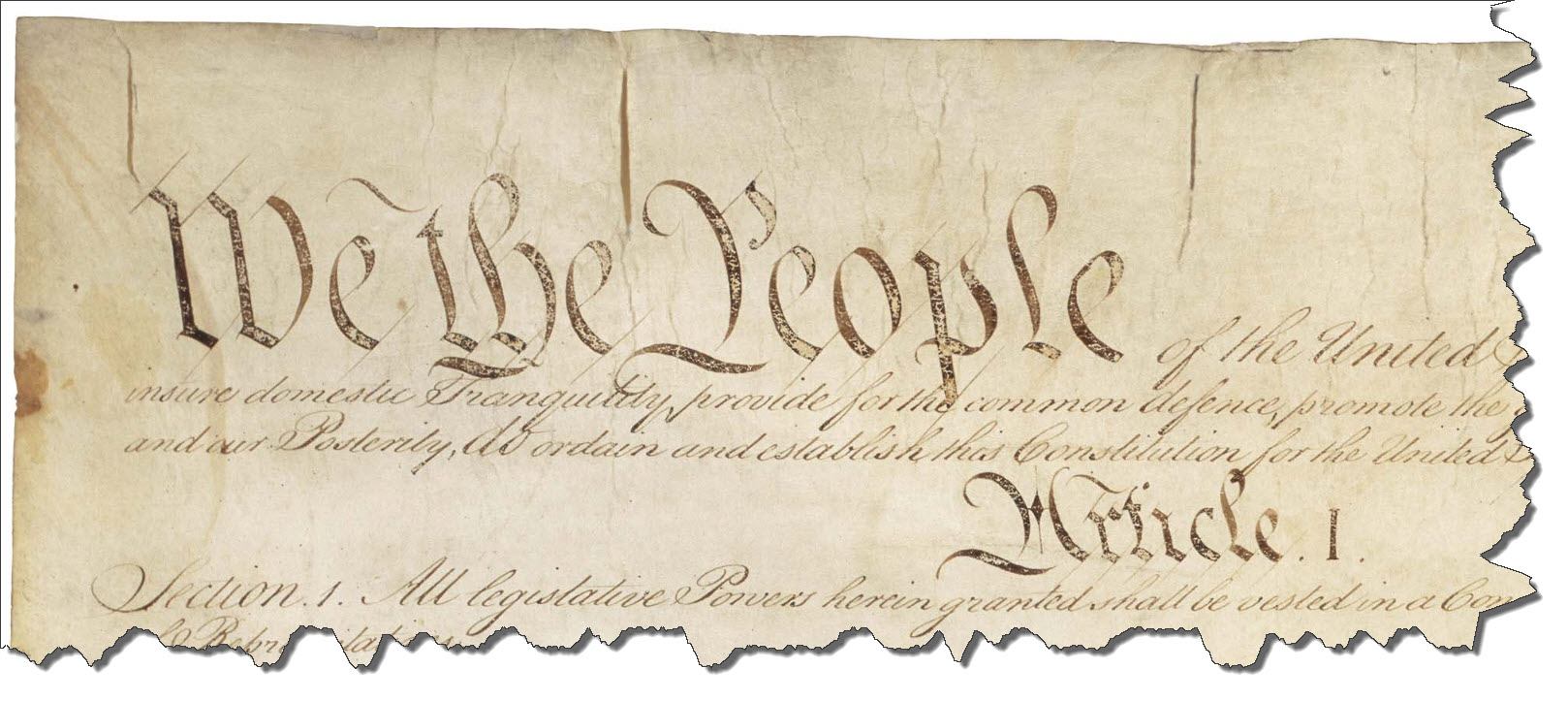
    Originally, many of the framers of the U.S. Constitution agreed to these words – while still owning slaves. They didn’t sign the documents and run right home and free their slaves.

    But over the years, these words could have been changed, but they were not. “All” could have been changed to “some” because, unfortunately since this country’s beginning, it’s been interpreted that way.

  • The high cost of advertising

    No one asked me, but I think America is too stupid for the advertising that we use. I mean when words like “new and improved” make us think that a product is better or that because we see “sale” we think there is a deal, there’s a problem.

    We then proceed to spend and spend and spend.

    Whether we can afford to or not is not a deterrent. It seems that we spend based on mood. For some of us, if we’re happy and we know it – instead of clapping our hands – we swipe our credit cards. If we are sad and depressed we think to buy something to cheer ourselves up. If we’re angry we think we deserve something new. When we have something to celebrate we buy something. Weddings are celebrated with gifts, as is graduations, births, deaths, going away and coming home parties. There are cards to buy for every occasion under the sun. Hallmark doesn’t miss a thing!

    Advertising got us to this point. Although other countries share in the advertising double-cross, in America the Federal Trade Commission is the highest authority. This commission has the responsibility of regulating laws and rules of advertising. Now, although there is much negligence in the way the FTC governs advertising to adults, I want to get your attention by shedding a little light on what they allow to be advertised to our children.

    According to the FTC there was 1.6 billion dollars spent in 2006 for advertising to our children. Interestingly enough, there is no universal definition of a child when it comes to advertising. National jurisdiction is supposed to define a child. For the purposes of advertising law, the definition of a child varies from one jurisdiction to another. It seems that,  12 is commonly used as a cut-off point, on the basis of the widespread academic view that by the age of 12 children have developed their behavior as consumers, effectively recognize advertising and are able to adopt critical attitudes towards it.

    My oldest daughter is 12 and I have another daughter that’s 10. I would say that my children are definitely true to their age based on maturity. My kids are far more Disney channel and Nickelodeon than anything else. They are still naïve and innocent (Thanks to God!) and they don’t look at commercials and think to themselves, “Wow! That product was geared toward me.” My daughters were watching TV the other day and I noticed a commercial for Dove body spray which had a young girl in the commercial. Afterwards, I asked my daughters did they want to try the product, they responded, “what product?” I smiled. You get that response by limiting the amount of TV.

    In any event, you can take a five-year-old down the cereal aisle and watch their expression. Look at where the eyes of the characters on the cereal box are focusing. Who are they staring at? There is a psychology to advertising that should not be allowed. Christmas can almost be considered an attack against us. A deliberate plan to get us to spend money – money some of us don’t have. Our banking system is in cahoots as we are allowed credit limits which exceed our actual earnings. Although it may be too late for us adults, I wonder what it would be like, if the U.S. and the FTC adopted the same guidelines as other countries in regards to its advertising to children 12 and under.

    In the United Kingdom, Greece, Denmark and Belgium advertising to children is restricted, and in Quebec, Sweden and Norway, advertising to children under the age of 12 is illegal.

    The European Union also has framework legislation in place which sets down minimum provisions on advertising to children for its 27 member States. The EU Audiovisual Media Services Directive sets out several EU-wide rules concerning advertising to children:

    Advertising shall not cause moral or physical detriment to minors, and shall therefore comply with the following criteria for their protection:

    a. it shall not directly exhort minors to buy a product or a service by exploiting their inexperience or credulity;

    b. it shall not directly encourage minors to persuade their parents or others to purchase the goods or services being advertised;

    c. it shall not exploit the special trust minors place in parents, teachers or other persons;

    d. it shall not unreasonably show minors in dangerous situations

    e. Children’s programmes may only be interrupted if the scheduled duration is longer than 30 minutes

    f. Product placement is not allowed in children’s programmes.

    g. The Member States and the Commission should encourage audiovisual media service providers to develop codes of conduct regarding the advertising of certain foods in children’s programmes.

    Source: Television broadcasting activities: “Television without Frontiers” (TVWF) Directive from europa.eu

  • We have no right!

    I have been waiting to weigh in on a topic that is near and dear to me. I’ve been wanting to say something, but I wanted it to be received well so I held my peace. Sometimes it’s good to let certain things settle a bit before saying something about it. I am an avid basketball fan – especially NBA basketball.

     I actually love all sporting events, but I think over the years I’ve changed. Games are great to watch. I’ve even had an occasional bet on a game. I guess I’m a fan of sports because of how well I know that sports has changed many lives – both good and bad. The potential for lives to be changed for the better is almost worth all corruption that happens.

    Sports have been the way some folks learn about life. It has been the ticket for some to go to college, become millionaires and even turn lives around. Sports have allowed us to witness the God-given gifts of men and women who excel through various levels. To watch Kobe Bryant or Michael Jordan play basketball or Venus and Serena Williams play tennis or Usain Bolt run or Michael Phelps swim – well, you get the picture. Sporting events bring sports fans a lot of joy.

    Recently, LeBron James decided to jump into free agency and sign a multi-year contract with the Miami Heat.  The reaction from Cleveland was clearly over the top. Once the announcement was made, Cleveland Cavs fans burned their LeBron James jerseys in the street. I was in Westlake, Ohio a few days ago and they were selling shirts which called the superstar the “Lyin King” among other things. I had not seen this much hatred since the owner of the original Browns football team decided to move the team away from the city. Ugliness ensued and the fans were left without a professional football team for a while, but the city was able to retain the Browns name.

    Because of our love for the games and the passion that goes with it, I have found Ohioans to be very loyal to their teams. There are people who cheer for Ohio State that never even went to college. This was a shock to me coming from Michigan. I mean, I love the Maize and Blue too, but I’m not going to get into a heated argument after a game. When I first came to Ohio, a Buckeye fan keyed my car after U of M beat OSU because my car sported a Michigan license plate. I thought these people were crazy. They’d ask me each Saturday who I was rooting for and I would always say, “the Broncos” after my alma mater WMU. I would tell them that the game didn’t matter to me and that I just hoped we see a really good game. Even members of my former congregation would express their likes or dislikes on Sunday morning as to who won or lost Saturday night.

    My point here is this: As fans we have the right to cheer or boo; to have favorite athletes and choose whose jersey we will wear. But when we start wishing ill-will toward our fellow man or wanting to do bodily harm to an athlete, we have crossed the line.

    Earlier this year, now former UT coach Lame Kiffen left the school for the head coaching job at USC. UT fans showed their displeasure by publicly threatening his family, harassing his children and making statements like they hope his plane crashes on the way to USC. One fan said online in a statement, “Everyone is so upset now about this, but we need to let it go, it is out of our hands. Lame Kiffen’s day will come, just like the good ol’ book(Bible) says you do a good thing and you shall be rewarded, but you do bad thing and you will not be rewarded. Look on the positive side, we will get a better coach and our team will be #1 this year!” This quote is mild except for the obvious lie told on the Bible here. The good ol’ book as this fan calls it never says anything about good work always yields good rewards and visa versa. I though TN was the heart of the Bible belt?

    This problem is widespread and we need to get a handle on it. If a professional athlete chooses to leave your hometown and go with another team and a few days later you are still stewing about their decision and raising your blood pressure as a result – or if you are getting so angry as to have thoughts of harming the athlete, you need help.

    LeBron James is gone, Cleveland! You were not robbed and he does not owe you a thing. He made a choice that he felt was in the best interest of his family. Be thankful for the time you had him for. Be glad that a world class athlete played for your favorite team and gave his all. Be thankful that you got to witness such a talent. And above all else, remember that it’s a business and no one has to get your permission to do anything. When it’s all said and done, those of us who love sports are just fans. No more, no less. And we need to start acting like fans.

  • Happily ever after

    by guest columnist Hope Seavers

    “Happily Ever After,”  we’ve all heard the phrase, but what does it mean and how does one get there?   Does it mean that once you get married something “magically” happens or are there other factors involved?   I’ve worked with several couples who, after 20 plus years, are considering divorce because they are no longer happy…they’ve grown apart.  More accurately, one member of the dyad has grown and the other has remained stagnant.  The stagnant member proclaims, “I haven’t changed…I don’t understand what happened!”  It’s human nature to change and grow, otherwise, how could one mature through the various stages of human development?  It stands to reason that in a marriage it’s necessary, for both husband and wife, to grow and change as well.

    Let’s take a moment to look at marriage as it relates to Christianity.  On the day of Pentecost, Peter preached a very powerful sermon, teaching that repentance and baptism are necessary to receive forgiveness of sins and to be added to the church (Acts 2:38 – 41).  So, once the baptism takes place, does that mean that the once wayward individual has arrived…that there is no more need for growth and maturity?  Not according to 1 Peter 2:1-3, which says “Wherefore laying aside all malice, and all guile, and hypocrisies, and envies, and all evil speaking,  As newborn babes, desire the sincere milk of the word, that ye may grow thereby.”  It’s clear from this passage that change must happen in order to mature in Christ.

    Just as each Christian must continue to grow in knowledge and faith, so must each individual of the marital union.  The lives of Paul and Peter are excellent examples of how the “not so righteous,” through faith and obedience, matured into servants for the Lord.  What is the parallel for the husband and wife of today?  First of all, each individual needs to be “one whole,” before the dyad can truly function on all cylinders.  Now, it would be great if “wholeness” could have been achieved before the marriage, but unfortunately, that’s not always the case as evidenced by the climbing divorce rate in the United States.  In our society, the alternative for most is to just suffer through it as the traditional wedding vows dictate, “…for better or for worse, for richer, for poorer, in sickness and in health, to love and to cherish; from this day forward until death do us part.”  Come on now…who wants that, really!?!  Suffering through it produces relationships where the husband and wife are, at best, roommates and, at worst, just counting the days until the other one leaves (by any means necessary if you catch my drift).  This is the antithesis of what God intended for marriage to be.  God expects each individual to study His word regularly and apply it to their lives (I Timothy 3:16 – 17).  Through this process, some cognitive and behavioral changes will take place, that manifest themselves in the putting away of unfruitful habits (i.e., nagging, uncontrolled anger, passive aggression, idleness, gluttony, poor stewardship etc.)  and adopting new more profitable ways of being (i.e., congruent communication, long suffering, working toward a meaningful goal, healthy eating and exercise, self-control,  etc.) (Romans 12:1-21).  This process is not about placing blame on or trying to change the other, but rather putting the onus on self to be the best that God intended.  When our lives are aligned with God’s will, the result is always “Happily Ever After”.

  • Part 2: Is my heart right with God?

    Adam and Eve continued their family problems as the fourth chapter of Genesis introduced us to the oldest lesson in the Bible. The account of Cain and Abel shows perfectly the joys of serving God and the consequences of disobedience. This account tells us how to be pleasing to God and how to disappoint God. It tells us what good God can produce in us through His revelation and what bad things can be conjured through our imagination.

    In Heb. 11:4, the Bible tells us that it was Abel who offered a more excellent sacrifice than Cain did and it was from that sacrifice that he obtained witness that he was righteous. One of the joys of being a child of God and having the opportunity to serve Him with gladness is the fact that we can know assuredly that we are righteous.

    In Jer. 23:1-8 we understand that in the rebuke of the pastors of Judah and Israel, the prophet explains that our righteousness is in the Lord and that being true, everyone who is “in the Lord” has obtained righteousness through Him. Abel’s witness, therefore, is in God reaching down from heaven and consuming his offering (I Chr. 21: 26 and 2 Chr. 7:1) and likewise with us as Paul said, “…like as Christ was raised up from the dead by the glory of the Father, even so we also should walk in newness of life.”

    Jude well documents the perils of traveling “the way of Cain.” Cain had his own ideas about how God should be to him. Cain obviously took God’s word as a suggestion instead of heeding the Master’s voice. Even in the text where God gave him an opportunity to turn from his ways (Gen. 4:5-7) he chose instead to go his own way and kill his brother – which led to Cain being banished from the presence of God. This must be the wickedest of states to be in. Who would want to be alienated from God?

    But, dear reader, isn’t there a little “Cain” in us all? Why is it that we knowingly do things? Sometimes we even plan to do things wrong. God’s word tells us to have self control, yet when someone crosses us we let them have it. If we don’t lay hands on them, we definitely have a few choice words for them. God’s word requires us to love one another, but for some reason we always want to love the people who are easy to love. As for the challenging folks – they don’t stand a chance. And some of us believe that it’s ok to not show love to the people who make life difficult for us. It’s hard! We remember that it’s God we want to serve, it’s just that we remember that too late. And so quickly things are said or done that we wish we could take back.

    Thank God that there is hope for us. We live in this flesh and until we are changed at Judgment Day to put on incorruption, we will sin. God knew this so He sent Jesus to take our punishment. As a result, we now have the forgiveness of sins, a promised inheritance and God’s Spirit with us. What God is expecting from us is that we walk by faith. We’re not called to be perfect, but we are called to be faithful. Catch the difference: Faith requires us to hear, believe, trust and obey. We hear God’s word. We believe that his word is true. We trust that the things said in his word will come to pass and then we obey what it says. This does not make us perfect –  it makes us pleasing to God.

    To answer the question is our heart’s right with God, we must first establish who we hear, who we believe, who we trust and who we obey. If I still think that I have value (in and of myself) and have taken credit for my good fortune, then I should hear myself. If I believe that God is far greater than I am and His thoughts are not my thoughts and His ways are far above my ways, then I should hear Him. The choice is really simple. It’s the consistency that’s going to kill us.

    Be encouraged my friends that despite the odds and everything that we see, God is in control and can definitely be trusted. Make peace with the Almighty and live faithful unto Him. For the 117th division of Psalm states: “O praise the LORD, all ye nations: praise Him, all ye people. For His merciful kindness is great toward us: and the truth of the LORD endures forever. Praise ye the LORD.”

  • Part 1: Is my heart right with God?

    We have many examples biblically and in our daily lives of the challenges and triumphs of serving God. Sometimes we have to sit back and be honest about the answer to this question: Do we really want to serve God? This is one of those questions that we should be honest with because God already knows the answer. Without embarrassing myself or any of the folks I counsel, let’s review how hard it can be through the eyes of the first family.

    God gave Adam and Eve dominion over everything that He created on earth and entrusted them as keepers of the Garden of Eden. Adam was clearly given instructions on how to serve God and what God’s expectation was within their covenant. There is sufficient evidence that Adam instructed Eve regarding service to God, as her conversation with the serpent reveals instructions regarding the forbidden fruit – her mate would have been the only person to tell her. (Gen. 3:1-5).

    The Bible does not reveal to us exactly how long Adam and God shared this covenant relationship before Eve was created, but arguably Adam definitely knew the benefits of this union and enjoyed the splendor of serving God and being obedient to His word.

    Unfortunately, Eve was deceived and Adam turned from leader to follower and the two were alienated from God and sin separated them. The covenant had been broken and the relationship drastically changed. In this state, it would have been better for Adam to have never known the covenant relationship with God rather than experience it and lose everything. Said Peter in 2 Pet. 2:21: “For it had been better for them not to have known the way of righteousness, than, after they have known it, to turn from the holy commandment delivered unto them.”

    We have the same opportunity Adam and Eve had to glorify God. We receive arguably better things than they did, considering the fact that the world is a bit more advanced than in their day.

    Nevertheless, as they struggled to maintain a relationship that is pleasing to God, we do, too. And we don’t do it for the same reason they didn’t – we lust from our eyes, we lust in our flesh and we’re full of pride. Satan knows these things so he attacks us through one or all of these three.

    If you read the conversation between the serpent and Eve you will see these three things in play:

    • Eve saw that the fruit was good (lust of the eye)
    • Eve saw that the fruit held the key to wisdom that could make her like God (pride of life)
    • Eve’s answer to the question of why they were at that tree in the first place (lust of the flesh)

    Adam and Eve could eat from any tree save this one. It was in the midst of the garden. Wouldn’t you think that it would be easy to avoid? Why couldn’t they stay on the outer banks and never go into the midst of the garden to be tempted regarding the tree?

    The challenges we face in the flesh lead us to second guess what we know to be right or wrong. It is literally how we are drawn away.

    Can this process be avoided?

    Next week we’ll examine Cain and Abel and draw some meaningful conclusions about them and the lesson that comes from their story.

  • Who’s your daddy?

    A young lady, after seeing the country embrace Mother’s Day, thought to establish Father’s Day. This young woman’s father was a Civil War veteran and had to raise a newborn with five of his other children following the death of his wife at the newborn’s birth. This woman recalls the love and tender care her father had for their family and that fact that he raised them on his own.

    Her campaign led to the 1966 proclamation by then President Lyndon B. Johnson declaring Father’s Day to be the third Sunday in June.

    It seems that the role of the father was short-lived in the home as the liberation of women, equal opportunity for women and minorities and the media all contributed to the destruction of the father.

    Now this is not to say that there are not any great fathers today – there are tons. There are still men who care and love their families and have contributed greatly to the success of their children and their mental stability.

    What I am saying is that the number of truly great dad’s pale in comparison to the number that are bad, don’t care, are not trying or think they have done enough.

    America began to abandon its puritanical concept at the beginning of women’s liberation. Women needed to be liberated from the stereotypical roles forced on them by society. Along with these rules, women were trapped in these roles because our laws at the time did not protect them or provide a way for them to earn a decent living.

    Moreover, there were no guarantees to force the men to care for their children if they left.

    Today, new laws have given women the chance to earn just as much money as a man. She is now free to open her own door, die in wars, hear all the dirty jokes they want and stand up on crowded buses and subways without a man giving up his seat.

    And now the men are just free.

    When the women did the work that was stereotypically given to men, men did not, in turn, begin doing their work. This led to women having to work 40 hours or more per week and then come home and cook, clean and look after the kids. There still isn’t a rule that says a man even has to help, although it would be nice.

    Following liberation and new laws, the media helped to ensure that the role of the father would never be the same.

    The father went from being the steady, solid rock in the home that gave stability to the family and reinforced their core values, to being the buffoon and tail-end of all the jokes. If you are an avid TV watcher or at least enjoy watching TV land and Nick-at-Nite on cable, you will recall strong fathers like Ward Cleaver, Andy Griffith and Howard Cunningham. These fathers were traded in for weaker fathers such as Fred Flintstone, Fred Sanford and Archie Bunker.

    Then it got even worse as Peter Griffin (Family Guy), Homer Simpson and Cleveland Brown (the Cleveland show) began to dominate the sitcoms. These TV fathers helped shape expectations of fathers in the home. They have contributed to the destruction of the family and made dad nothing but a joke.

    We truly need a day to celebrate dads. I hope that it would be a day that males could be educated on what it takes to be a “real” dad. We need to remember when fathers chose to make sure their families knew they were loved, safe and secure. A time when fathers made sure their families never had to worry about them not coming home. We need to be reminded of a time when the fathers were the real heroes in their families and not some cartoon or some other fictitious character, but imitators in all aspects of our Father in heaven.

  • A Love Letter to Meadowlawn Church of Christ

    On June 6, 2004 I officially became the ministering evangelist at Meadowlawn Church of Christ in Sandusky, Ohio.

    I never wanted to preach or even be seen as a preacher. Many accept this calling and the criticism that goes with it. Living a life under a microscope for people to judge you and hold you to a different standard than the rest.

    For me, Meadowlawn always seemed to fit. I remember in 2004 having the opportunity to leave Ohio and take the ministerial work in Rockledge, FL at the Fisk boulevard Church of Christ. The church was 10 times the size of Meadowlawn and had more than 400 members. Again for me, Meadowlawn always seemed to fit.

    At Meadowlawn, God took me through a transformation by the things which I endured. There were many struggles. We struggled with tradition, evangelism, money, discipleship and support. As a result, we grew into a family. We fellowshipped together, we cried together and we fought together. Every problem we faced seemed to bring us closer.

    I grew up spiritually at Meadowlawn and was able to make full proof of my ministry. I would not change the experience for anything.

    Now it is time for me to move on and I have mixed emotions about that.

    I love what we have been building and I love the fact that our congregation is not your typical congregation. Most have been able to take off traditional glasses and view the Bible, God’s people and the service we give in a purer fashion. We began to truly allow Jesus to be the author and finisher of our faith.

    We grew in a way that increased our knowledge of God’s Word and allowed some of us to build a closer relationship with Christ. I cannot thank the church enough for the opportunity to serve and the patience to forbear me in areas where I needed to grow.

    I want to encourage you all to continue in the fight of faith. Love one another. Laugh together often and never return to the traditional shackles that have enslaved you for so long. Support the leadership and encourage them to do what’s right. Invest in the children and take care of the seniors. Don’t allow Satan back into the church. Challenge everything you are taught to make sure it is of God and never quit reaching out to the community.

    I hope that you all know how much I love and care for you and may God be with you all the way.

    Now unto Him who is able to keep us from falling; and deliver us faultless before the presence of His glory with exceeding joy; to the only wise God our Father be glory, majesty, dominion and power both now and forever, amen!