Category: Love

  • Count it all JOY

    I work in a place that surrounds me with death. Not in the morgue or the ER and I’m not a grave-digger or a funeral director; I work in hospice.

    These groups have a lot in common, but I want to talk about one fundamental difference. In hospice we meet families on the brink of a major tragedy: Someone close to them is dying.

    How is it possible to “count it all joy” when someone signs on to Hospice?

    To count it all joy is to understand what God intended for us to bring to each calamity. As the flesh brings destruction, the spirit is supposed to bring joy.  That joy is not limited to the expectation of eternity, which is awesome in and of itself!  Those who are left after the trial have been placed in a unique position: They can either sit and have a pity party or they can share their story with someone who’s going through a similar trial.

    You see, we are allowed the experiences we have for the purpose of growth. Not just growth for us, but for everyone in our scope of influence. We need growth. We need both good and bad experiences. We need to share our stories.

    I remember last Mother’s Day, talking to a friend of mine who buried her mother the previous year. I asked how she was doing and she said, “not good.” I asked what she was experiencing and she just looked at me with tears in her eyes and gave me a big, long hug. Afterwards she asked me a favor.

    She said, “will you go and give that hug to your mom and tell her you love her and thank her for being your mom?” She said that she only wished that she could do that for her mom one more time.

    Boy, I saw motherhood in a different light that day. And it’s not that I don’t appreciate my mom, in fact we are a very loving family. However, sometimes even though we assume a person knows how we feel, it’s always a good practice to let them know … and let them know often.

    I did exactly what my friend asked me and I don’t want to spoil the results for you. Please go to whoever is special in your life and hug them as if it will be the last time. And then let them know how special they are to you.

    It will change the way you see the world.
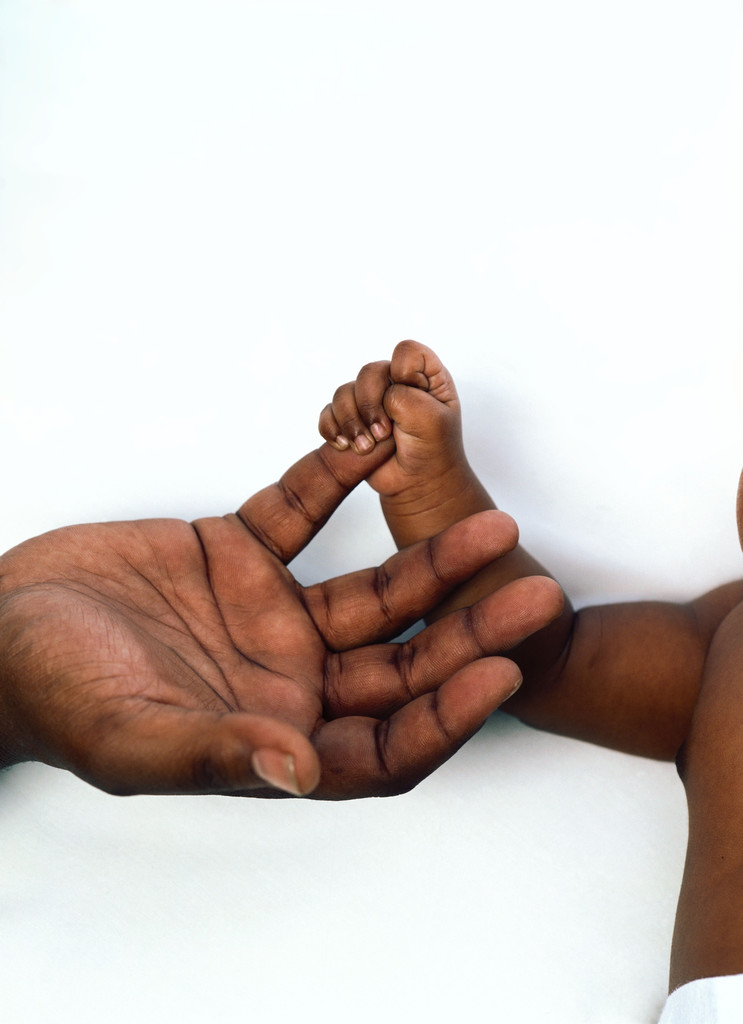
  • Part 2: Unconditional Love???

    In the Bible, the Apostle Paul made a really big deal about the gift of love. He says:

    “If I speak in the tongues of men and of angels, but have not love, I am only a resounding gong or a clanging cymbal. If I have the gift of prophecy and can fathom all mysteries and all knowledge, and if I have a faith that can move mountains, but have not love, I am nothing. If I give all I possess to the poor and surrender my body to the flames, but have not love, I gain nothing. Love is patient, love is kind. It does not envy, it does not boast, it is not proud. It is not rude, it is not self-seeking, it is not easily angered, it keeps no record of wrongs. Love does not delight in evil but rejoices with the truth. It always protects, always trusts, always hopes, always perseveres. Love never fails…”

    Whenever I have heard this passage (1 Corinthians 13:1-8) taught, it’s used as an absolute definition. I believe that the intent of this passage is to give you the results of practicing unconditional love, not simply define it.

    Unconditional love has nothing to do with the person being loved. It has everything to do with the person who is giving the love. Unconditional love seems to refine the giver. We dwell on the benefits to the receiver, but the giver of unconditional love benefits the more.

    Let’s say that I have an anger problem, but I choose to love unconditionally. As my anger is kindled, I am faced with the choice of whether to honor unconditional love or follow my anger. If I allow love in, it will not only conquer my anger, but solve the reason why I am angry in the first place.

    Or say that I am faced with a person who has the reputation of being incapable of love, what are my choices? I could choose to stay away from that person which is what most would choose, or I could choose love. Now, this doesn’t mean that we allow people to run over us. It means that we will love them enough to do what others would not and that includes telling them what they really need to hear instead of enabling their behavior.

    When you truly love someone, you don’t give up on them. This is why God said, “I will never leave you, nor forsake you.” When you truly love someone, when they are at their weakest, you are the strongest. This is why it was “while we were without strength, Christ died …”.

    When you truly love someone,  you become a benefit to them that they can see. You enhance their life so that it’s worth living. This is why Christ said, “I came to bring you life and life more abundantly.” The greatest part of loving someone is doing something for them that they could not do for themselves. This is why “God so loved the world that he gave his only begotten son, that whosoever shall believe on him shall not parish, but have eternal life.”

    Love is something for the mature, not the immature. If you are trying to love someone and “self” keeps getting in the way, you’re not ready for the commitment of unconditional love. But if you would allow this love to have it’s way with you, all of your insecurities, fears, quirks and impurities would pour out of you.

    Remember, mankind requires a condition,but  God never did. Who do you believe will be left standing in the end?

  • Part 1: Unconditional love?

    Love is probably the most overused and misrepresented word in the English language.

    I say this because of the condition of the world. How many men use this word love to lure innocent woman into sexual relationships? How many children were conceived to teenage mothers under the idea that it was love? How many people have been betrayed by people who claimed to love them?

    Love is NOT something you fall in, something that finds you or something that you feel. Love is something that you know, it is taught and those who know what it is, practice it. It is a by-product of experiencing Jesus Christ or people like Him. It is expressed in many ways. Clearly, it is a way of life.

    By the way love is done in our country, we will never understand it the way it was intended. Love is conditional in America. People practice it conditionally and place expectations of the people they are loving. Love is distributed based on whether or not you meet the lover’s expectations.

    This explains why a young woman searching for love will give herself sexually because she understands love as conditional. Men have long made sex a condition for their love. After all, that fits the love economy we have here so people just run with it.

    This also explains the divorce rate.

    Fifty percent of all marriages will end in divorce. That number goes up 20 percent for law enforcement and fire fighters. Why? Conditions were just not met.

    We have played with this concept long enough. Next week I will show you a more excellent way.

  • Thoroughbreds and Jackasses

    I’ve been looking at breeds of horses and similar animals and it dawned on me how much the dating world mirrors these breeds.

    Women have a very tough time in this world because it really seems that fairy tales and dysfunctional families have finally taken a toll. As little girls they begin to have expectations based on what they have been told.

    Most every little girl grows up believing that she needs to be saved!

    They believe that there is going to be some knight in shining armor coming around to “rescue” them from whatever the impending danger is. This guy would make them feel secure, happy, he would take care of them and they would never have to worry about working outside the home – he had it all covered.

    Just like dad?

    How many ladies today grew up in a dysfunctional family where if there was a live-in father, he could never really be anyone’s “savior”? Too many men run from the responsibility of parenting. Despite the fact that they have donated the sperm to create a child, these fellows aren’t looking forward to the family life.

    Well, what does all this have to do with thoroughbreds and jackasses? It seems that in our society the choices of men follow the same classifications as our four-legged friends.

    First, in the Equus ferus caballus family is the foal, sometimes referred to as the suckling and is generally less than a year old. For a man, this is the stage where he thinks he is ready to play house, but not ready to “support” a house. It’s at this stage where he believes that he is a man, but still needs the help of his parents – especially mom (place sucking sounds here). These “mama’s boys” – no matter how cute they are – are not ready for a serious, adult relationship and should be left alone.

    Next we fast forward to the Colt. This is a young male horse under the age of four. For adult males, these years symbolize college or the first couple of years in the workforce. This guy is not ready for a family, but is always mistaken for being ready. He will rant and rave about being an adult, but has not yet mastered the growth to equally challenge the responsibility of being in a committed relationship. I must mention that even though he’s on his way, this young man needs time to develop before being taken out to the track (of life).

    A stallion is up next and this would refer to a non-castrated male horse that is over the age of four. As a man, this level is crucial because just as the stallion is powerful and ready to ride, he is equally as playful and will say he wants to go to the track, but he’s really just looking for a rider. These animals love to be ridden and you’re a great rider if you can tame one of them. If you can’t, it’s best to walk away. You have to be willing to regroup and not throw all your eggs in one basket. Remember, just because you were not the right rider for one, doesn’t mean you can’t learn to ride another.

    When we begin to discuss Thoroughbreds (Tb) we are talking about a distinct breed of horse. Many modern Thoroughbreds can trace their pedigrees to three stallions originally imported into England in the 17th and 18th centuries. Everyone wants a Thoroughbred. Nowadays, we are so quick to call someone a Tb. It’s like if he stands bipedal, he’s a Tb! In actuality, Tb are men who know exactly how to “handle their business.” These are the real dudes that day in and day out deliver. There is no second guessing in their relationships. Unfortunately, they have become the “needle in a haystack” for the dating world.

    Now a Jackass is a domesticated member of the horse family and in our society, men in this category are a little less domesticated. They are arrogant, liars, selfish and stubborn. They seem to be the only ones who can’t see that they are like this. Their failures are always someone else’s fault. They are quick to tell you what’s wrong with you and could care less about your feelings. They will suck dry your energy, resources and emotions if you let them and it’s impossible for them (in their current state) to replenish anything. The hardest part of being in a committed relationship is thinking you have a Tb when you actually have a Jackass — but only a codependent woman would think that a Jackass was a Thoroughbred – and there is nothing more devastating than realizing you’ve been waking up next to a Jackass.

  • Can you love me?

    I’ve been pondering a question all week.

    I’ve been thinking whether or not it is easy to love me.

    Arrogance makes you answer the question too quickly and say, “Of course it is!”

    But in your most inner thoughts, when you get really serious about answering this question, what do you come up with?

    The first thing I thought about was what criteria I would use to really determine it:

    • Would I base this on the grounds of how often I attend church services?
    • What about how much money I make?
    • Or whether or not I can remain faithful and committed in a relationship?
    • Do my possessions make me easier to love?
    • What about my political views?
    • Am I easier to love if I have the heart of a servant or a leader?
    • Would I be easier to love if I were completely fit?
    • What about my intellect?
    • Would I be easier to love if I were smarter?
    • What if I were more attractive?
    • What if I were cleaner?

    The list could go on and on.

    So if I were to answer the question seriously, I would have to look at some standard of love.

    I chose to use Jesus Christ – since most people in our country show some allegiance to Him. The Bible says God is love, so in the case of the Son, He would have to be love, too.

    John 3:16 say, “For God so LOVED the world that He gave … .” It would appear that giving is a great place to start. If I could give unconditionally of my time and my means, this would make me easier to love because of the way I give.

    I think another important characteristic is sacrifice. It seems that a person who can be selfless would literally draw people to himself. This must be an important aspect as well.  I’m obviously still pondering this question. However, if I was to look at the other side and assume that it was difficult to love me, could I be honest and admit that it’s difficult?

    Why would it be difficult? Because I feel entitled and I want others to serve me, I make it difficult to love me. Because I feel someone owes me something or I’m not happy with my life and I want others to suffer because I’m not happy. Or because I think that I’ve done some great thing in the past and now I’m owed. Like say if I raised a family, maybe now I feel that my adult kids owe me something.

    Bottom line is this: We are going to one day stand before the judgment seat of Christ and we will have to give an account. When that time comes, can we say that we were lovable or unlovable?  This is our choice and I choose to be lovable. I choose to make a difference in the lives of the people that I come in contact with so that they will be better people, too. I pledge to let my light shine to honor my Father in heaven.

    If you choose the latter, I hope today you change. If not, I pray that He has mercy on your soul.

  • Happily ever after

    by guest columnist Hope Seavers

    “Happily Ever After,”  we’ve all heard the phrase, but what does it mean and how does one get there?   Does it mean that once you get married something “magically” happens or are there other factors involved?   I’ve worked with several couples who, after 20 plus years, are considering divorce because they are no longer happy…they’ve grown apart.  More accurately, one member of the dyad has grown and the other has remained stagnant.  The stagnant member proclaims, “I haven’t changed…I don’t understand what happened!”  It’s human nature to change and grow, otherwise, how could one mature through the various stages of human development?  It stands to reason that in a marriage it’s necessary, for both husband and wife, to grow and change as well.

    Let’s take a moment to look at marriage as it relates to Christianity.  On the day of Pentecost, Peter preached a very powerful sermon, teaching that repentance and baptism are necessary to receive forgiveness of sins and to be added to the church (Acts 2:38 – 41).  So, once the baptism takes place, does that mean that the once wayward individual has arrived…that there is no more need for growth and maturity?  Not according to 1 Peter 2:1-3, which says “Wherefore laying aside all malice, and all guile, and hypocrisies, and envies, and all evil speaking,  As newborn babes, desire the sincere milk of the word, that ye may grow thereby.”  It’s clear from this passage that change must happen in order to mature in Christ.

    Just as each Christian must continue to grow in knowledge and faith, so must each individual of the marital union.  The lives of Paul and Peter are excellent examples of how the “not so righteous,” through faith and obedience, matured into servants for the Lord.  What is the parallel for the husband and wife of today?  First of all, each individual needs to be “one whole,” before the dyad can truly function on all cylinders.  Now, it would be great if “wholeness” could have been achieved before the marriage, but unfortunately, that’s not always the case as evidenced by the climbing divorce rate in the United States.  In our society, the alternative for most is to just suffer through it as the traditional wedding vows dictate, “…for better or for worse, for richer, for poorer, in sickness and in health, to love and to cherish; from this day forward until death do us part.”  Come on now…who wants that, really!?!  Suffering through it produces relationships where the husband and wife are, at best, roommates and, at worst, just counting the days until the other one leaves (by any means necessary if you catch my drift).  This is the antithesis of what God intended for marriage to be.  God expects each individual to study His word regularly and apply it to their lives (I Timothy 3:16 – 17).  Through this process, some cognitive and behavioral changes will take place, that manifest themselves in the putting away of unfruitful habits (i.e., nagging, uncontrolled anger, passive aggression, idleness, gluttony, poor stewardship etc.)  and adopting new more profitable ways of being (i.e., congruent communication, long suffering, working toward a meaningful goal, healthy eating and exercise, self-control,  etc.) (Romans 12:1-21).  This process is not about placing blame on or trying to change the other, but rather putting the onus on self to be the best that God intended.  When our lives are aligned with God’s will, the result is always “Happily Ever After”.

  • A Love Letter to Meadowlawn Church of Christ

    On June 6, 2004 I officially became the ministering evangelist at Meadowlawn Church of Christ in Sandusky, Ohio.

    I never wanted to preach or even be seen as a preacher. Many accept this calling and the criticism that goes with it. Living a life under a microscope for people to judge you and hold you to a different standard than the rest.

    For me, Meadowlawn always seemed to fit. I remember in 2004 having the opportunity to leave Ohio and take the ministerial work in Rockledge, FL at the Fisk boulevard Church of Christ. The church was 10 times the size of Meadowlawn and had more than 400 members. Again for me, Meadowlawn always seemed to fit.

    At Meadowlawn, God took me through a transformation by the things which I endured. There were many struggles. We struggled with tradition, evangelism, money, discipleship and support. As a result, we grew into a family. We fellowshipped together, we cried together and we fought together. Every problem we faced seemed to bring us closer.

    I grew up spiritually at Meadowlawn and was able to make full proof of my ministry. I would not change the experience for anything.

    Now it is time for me to move on and I have mixed emotions about that.

    I love what we have been building and I love the fact that our congregation is not your typical congregation. Most have been able to take off traditional glasses and view the Bible, God’s people and the service we give in a purer fashion. We began to truly allow Jesus to be the author and finisher of our faith.

    We grew in a way that increased our knowledge of God’s Word and allowed some of us to build a closer relationship with Christ. I cannot thank the church enough for the opportunity to serve and the patience to forbear me in areas where I needed to grow.

    I want to encourage you all to continue in the fight of faith. Love one another. Laugh together often and never return to the traditional shackles that have enslaved you for so long. Support the leadership and encourage them to do what’s right. Invest in the children and take care of the seniors. Don’t allow Satan back into the church. Challenge everything you are taught to make sure it is of God and never quit reaching out to the community.

    I hope that you all know how much I love and care for you and may God be with you all the way.

    Now unto Him who is able to keep us from falling; and deliver us faultless before the presence of His glory with exceeding joy; to the only wise God our Father be glory, majesty, dominion and power both now and forever, amen!

  • Relationship Builder

    So you started the New Year a little on the rocks with your significant other and now they’re gone. One or both of you finally realized that it was time to move on.  Now it’s over.

    You tell yourself that you are better without them. You start tossing out reminders of him, like pictures, various articles of clothing, some gifts (of course not any diamonds) and you quickly change your Facebook status to single.

    You are left with unfulfilled expectations and anger.

    Typically what happens at this point is that you say you want to be alone and you remind yourself that the next person would only be a rebound, but not too soon afterward you are smothering the rebound.

    You begin to take those stored “unfulfilled expectations” and assign them to the new partner. You quickly find out that you are instantly attracted to anything that was the opposite of your ex. For example, if the guy you were with never opened the door for you, then all of a sudden that quality is escalated because of the past. If you were with a woman who really couldn’t cook too well, you’d be all over the woman who could provide you with the southern comfort of food.

    The danger is that whatever the new quality is that you are coveting may not have been a quality that mattered to you originally. It only became important when your previous relationship ended. This relational baggage makes ordinary qualities greater, thus confusing your judgment and actually making you “rush” the relationship and not even be able to recognize true love anymore. I have a friend on Facebook who a month ago was “in a relationship”, then two weeks ago she was single. One week later she was “in a relationship” again and I called to ask if it was with the same person and she was so excited to tell me about this new guy and how wonderful he was. As of today, they are engaged!

    Now I’m not saying that I don’t believe in love at first sight or any of the other fairytales given to us as children. I’m not saying that Hollywood’s boy meets girl, boy loses girl, boy gets girl again stories aren’t true. What I am saying is that these situations are as rare as hitting the lottery, becoming a professional athlete, becoming the next American Idol or winning an Olympic gold medal. Oh sure you have seen it happen before and you know that it’s possible, but the question here is: Are these scenarios probable?

    Before you try to “hook up” with another, you must first exam yourself. You can’t be “two” if you (or the other person) are not ones.

    We often enter relationships broken, wounded and with baggage. We have high expectations and are afraid to fully give of ourselves. How many times have you seen a relationship where a couple is together, and the guy hasn’t been working since they hooked up. Nine months into the relationship and the guy still hasn’t found ANY work. Before he entered that relationship, he should have mastered the whole job/car/house/independence thing before trying to connect with another. And what of the man who meets a woman who needs more than just a companion? This woman needs a caretaker, lawyer, doctor, sugar daddy and butler – and she’s not afraid to ask for it! Every phone call leads to her asking him to do something for her. She should have worked out all those needs in the beginning, before trying to start a relationship.

    Building a relationship should not be rocket science. It should start off with hesitation and anticipation. There should be long periods of talking and sharing (which is how you actually build the relationship) and a lot of patience.

    Only fools rush in.

  • The Gospel of Love

    There is a lot of information written about love. If you type the word “love” into a Google search, 1.4 billion search results appear.

    I was reminded of a song when I graduated from high school entitled “What about love?” by the rock band Heart. The song is about a person who has been sending love to another and for some reason it’s not getting through. The person she is sending her love to is climbing the ladder of success and doing big things and she’s reminding him about love.

    The chorus says:
    What about love?
    Don’t you want someone to care about you?
    What about love?
    Don’t let it slip away.
    What about love?
    I only want to share it with you.

    Love expresses so many things about us – our needs, desires, wants and our vulnerability. This is a universal way that we can give a part of our essence to each other. Love, done the right way, is God’s greatest gift to mankind.

    What about love gone wrong?

    It’s hard to have a conversation about love and not talk about hate. It’s great and I thank God for free will and giving us a choice. The idea was as we learned better, we would do better.

    In one of my favorite Michael Jackson songs he says:
    So I’ve learned that love is not possession.
    And I’ve learned that love won’t wait.
    Now I’ve learned that love needs expression, but I’ve learned too late.

    I believe there are people in this world who need an enema in regards to their love. In other words their love is stopped up, trapped inside of them and they don’t know how to get it out.

    These hurt people, hurt people.

    Because of their hurt, they become damaged goods and they desire that everyone would feel hurt like they do. You may have met some of these people. Some of the best places to find them is at work and at church!

    You can tell they are hurt in the things they say, the way they look, how they dress and it’s even reflected in the number of true friends they have. Their love is constipated!

    There are three ways to fix constipation:
    1. Have someone unpack it for you. In the nursing business this is the quickest way to get it done. And they actually go up there and get it.
    2. Use medication. There are some really good products on the market that use all natural ingredients for this.
    3. Let it happen naturally. Your system will get so backed up that eventually it’s forced out (drink plenty of water with that one).

    Of course, I’m referring to a literal case of bowel obstruction, but for love the answers are on the same line of thinking.

    Let’s take the last one first.

    Method Number Three has a few drawbacks. For love to eventually build up and flow out will happen in a sea of tears. Unfortunately, by this time, the person who was trying to love you has given up. This third method describes a condition where circumstances have made this person break down to a very lowly state.

    Some people never recover from this.

    They become depressed and may succeed at suicide. A person in this state needs to feel the love immediately and know that their show of vulnerability is not an embarrassment, but an improvement.

    Method Number Two is just good old-fashioned therapy. We all need therapy from time to time – it’s not that we’re crazy. Occasionally, we need to take something that will help get us back on track. Good therapy does just that.

    Method Number One has to be performed by someone who has a very close relationship with the person whose love is constipated. This person has to reach in and grab it. That means the constipated person must be confronted in love regarding their attitude, behavior or actions. The person who cares enough to confront them must not give up and be willing to fight the good fight of faith and to believe that the relationship can survive. And it can, because love covers a multitude of sins!

    This is the “good news” of LOVE.